Mom isn’t downloading a crypto wallet to buy groceries anytime soon. But behind those everyday card payments, one thing is already changing: who gets paid, when, and at what cost.
 No time? Read this.
•
Payments look smooth. Settlement is where the mess lives.
•
If something changes first, it’s usually not the “pay” button — it’s payouts, FX, delays, and disputes.
•
Ask just three things:
1.
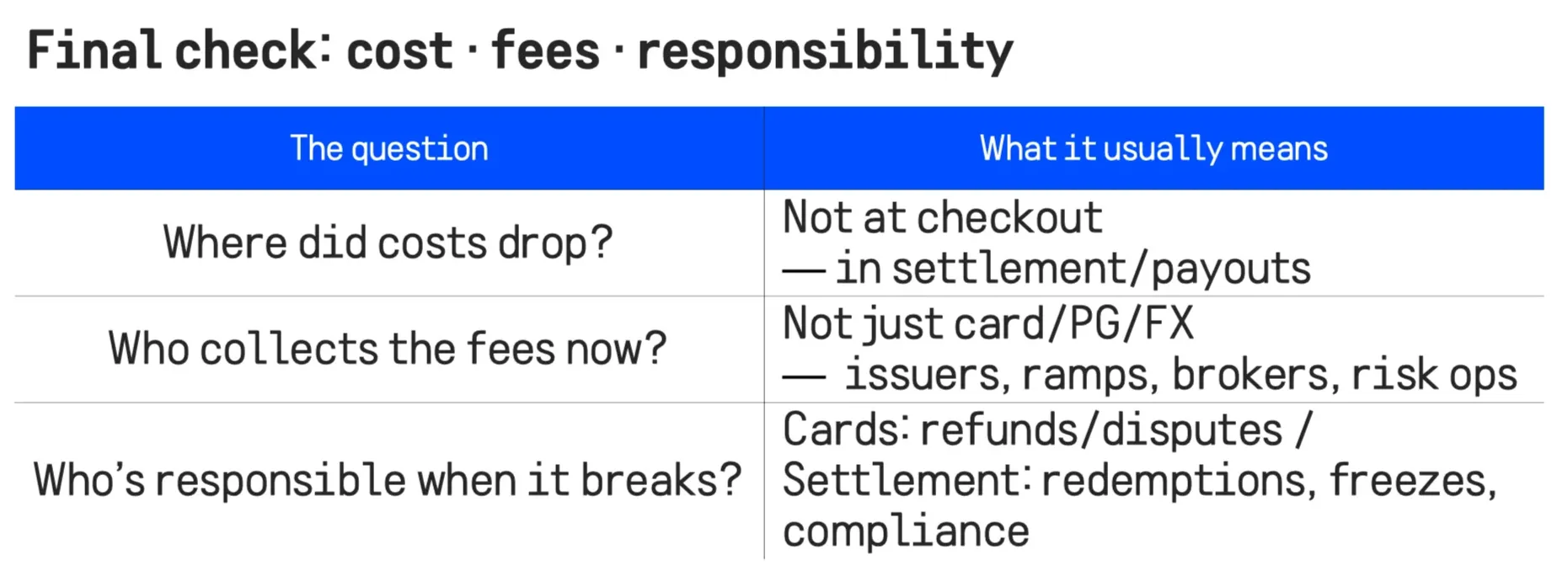
Where did the cost actually drop?
2.
Who’s collecting the fees now?
3.
Who’s on the hook when it breaks?
Here’s the trap: “Payment UX” isn’t where the real cost is.
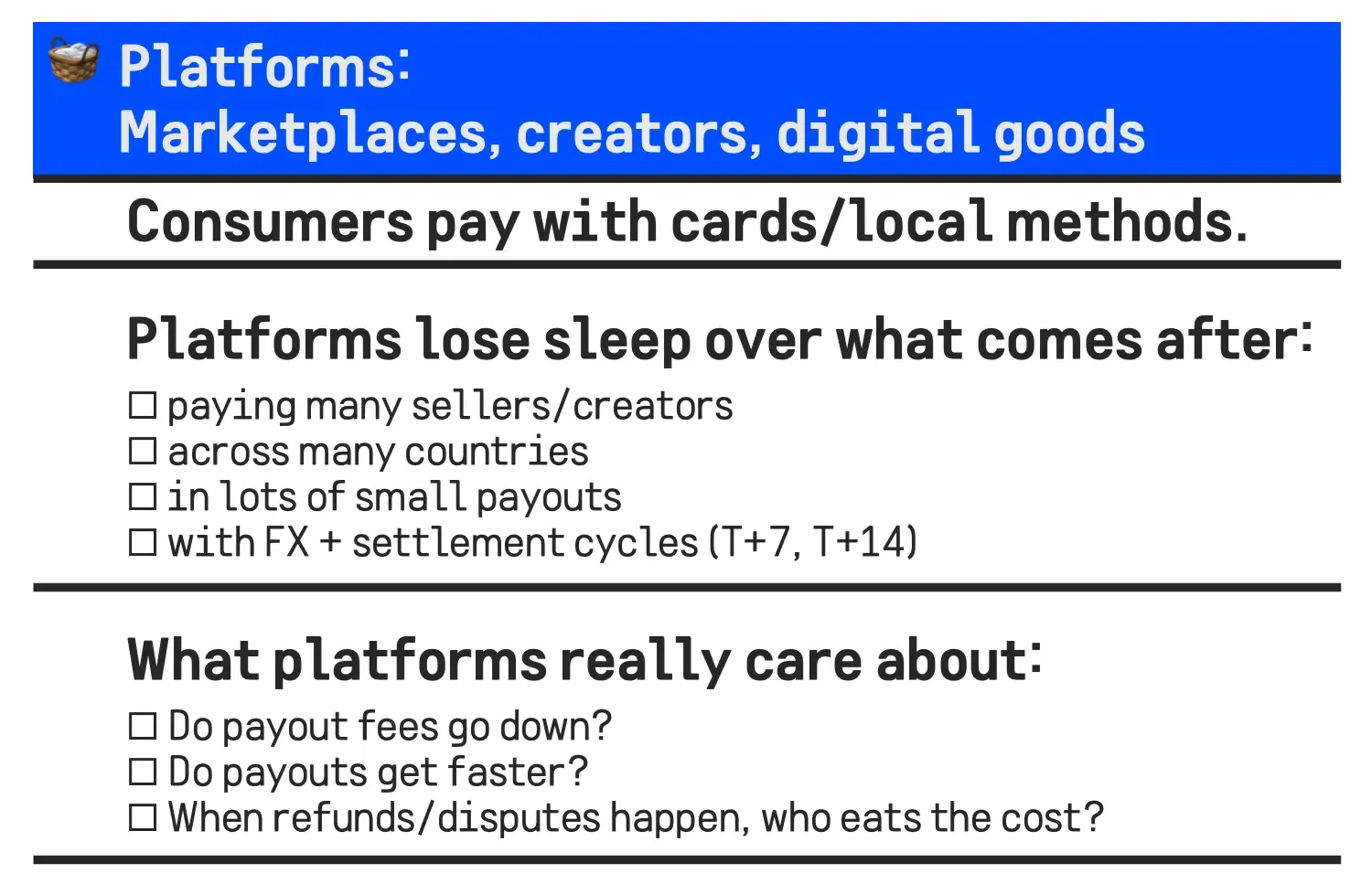
Paying is easy. Paying everyone else is where it gets messy.
Cards can feel instant.
But merchants and creators often get paid days later.
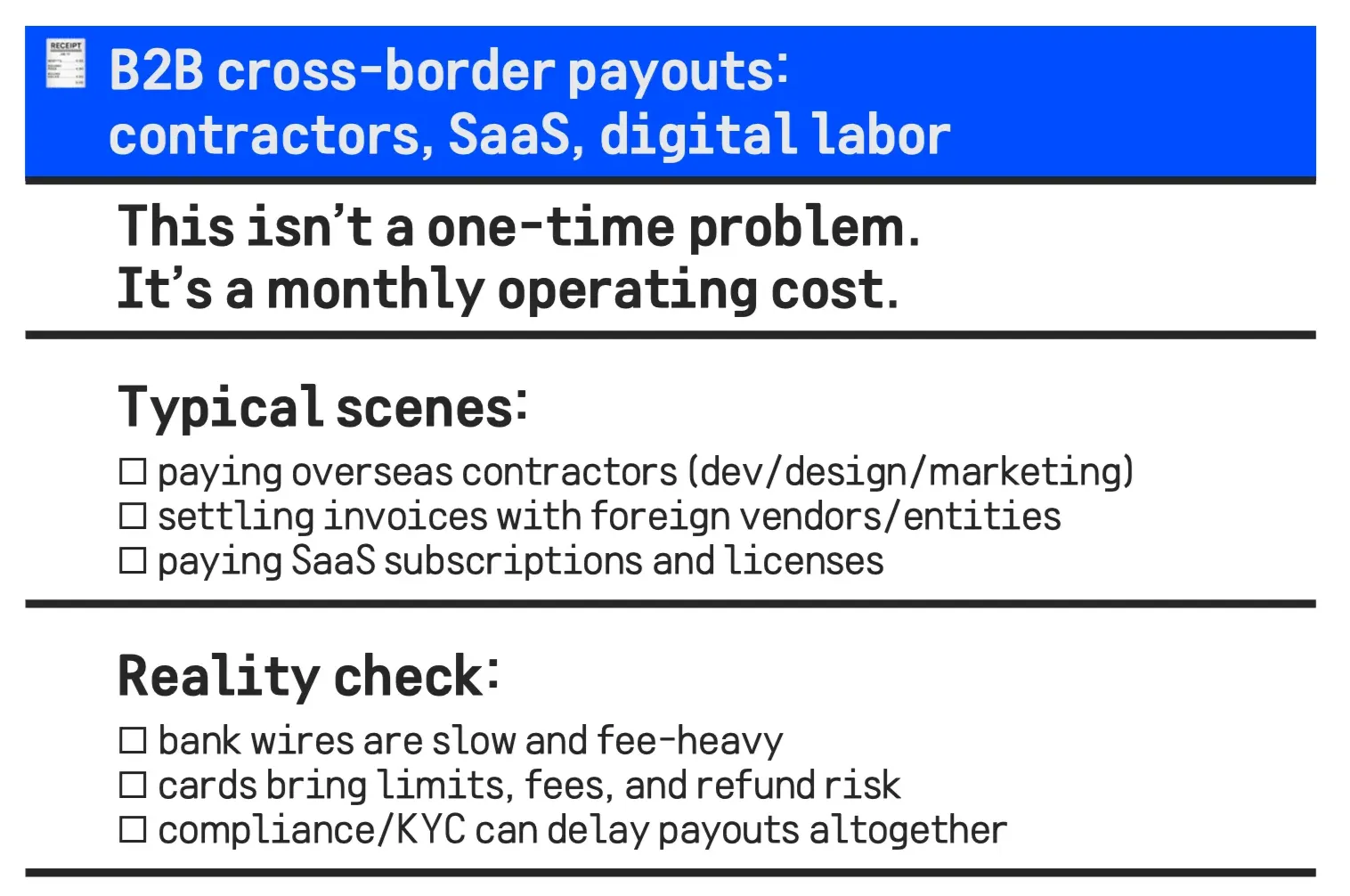
And once you’re paying out across countries — lots of small transactions, FX spreads, payout cycles — costs quietly pile up.
So if something “goes mainstream” first, it’s often because it fixes operating pain, not because it looks cool at checkout.
Here’s how we’re breaking this down
•
Payments: what consumers see
•
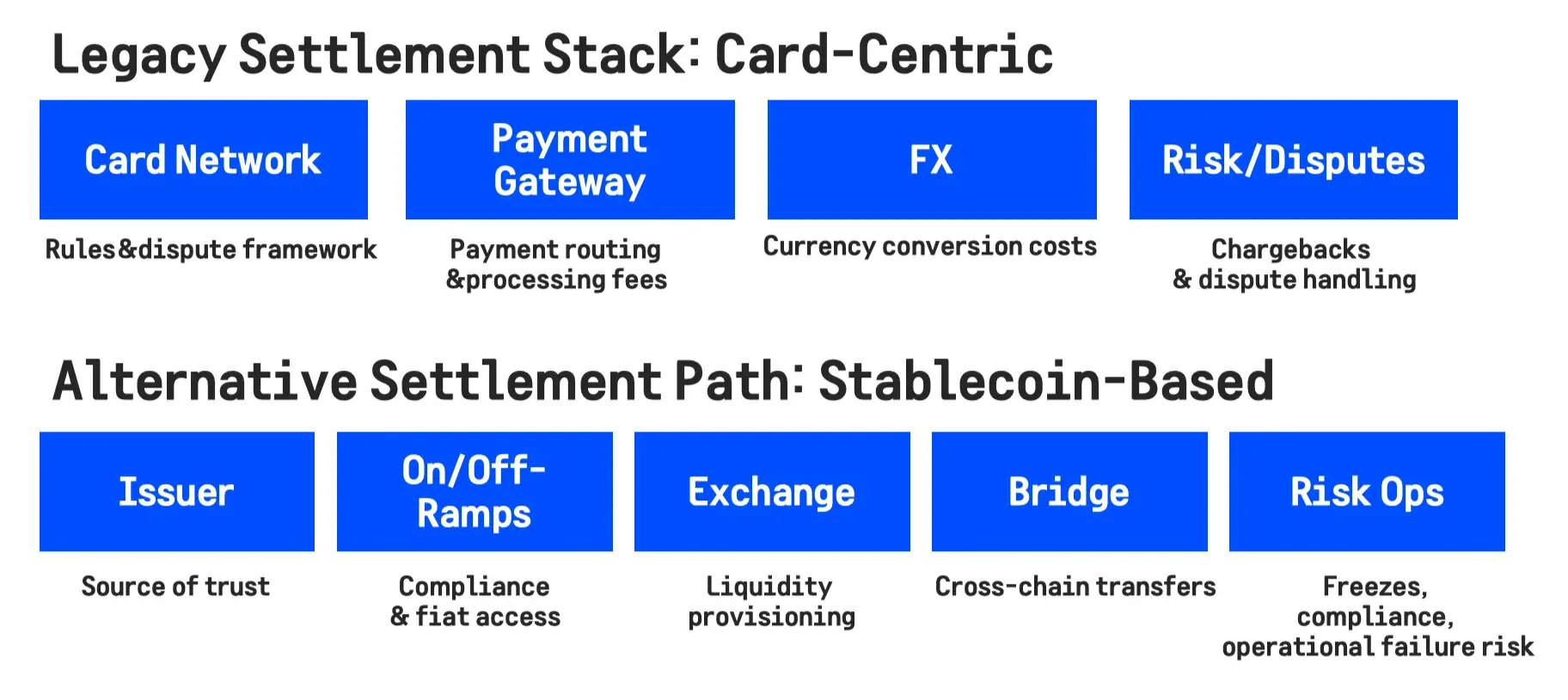
Settlement & payouts: cost and speed of moving money
•
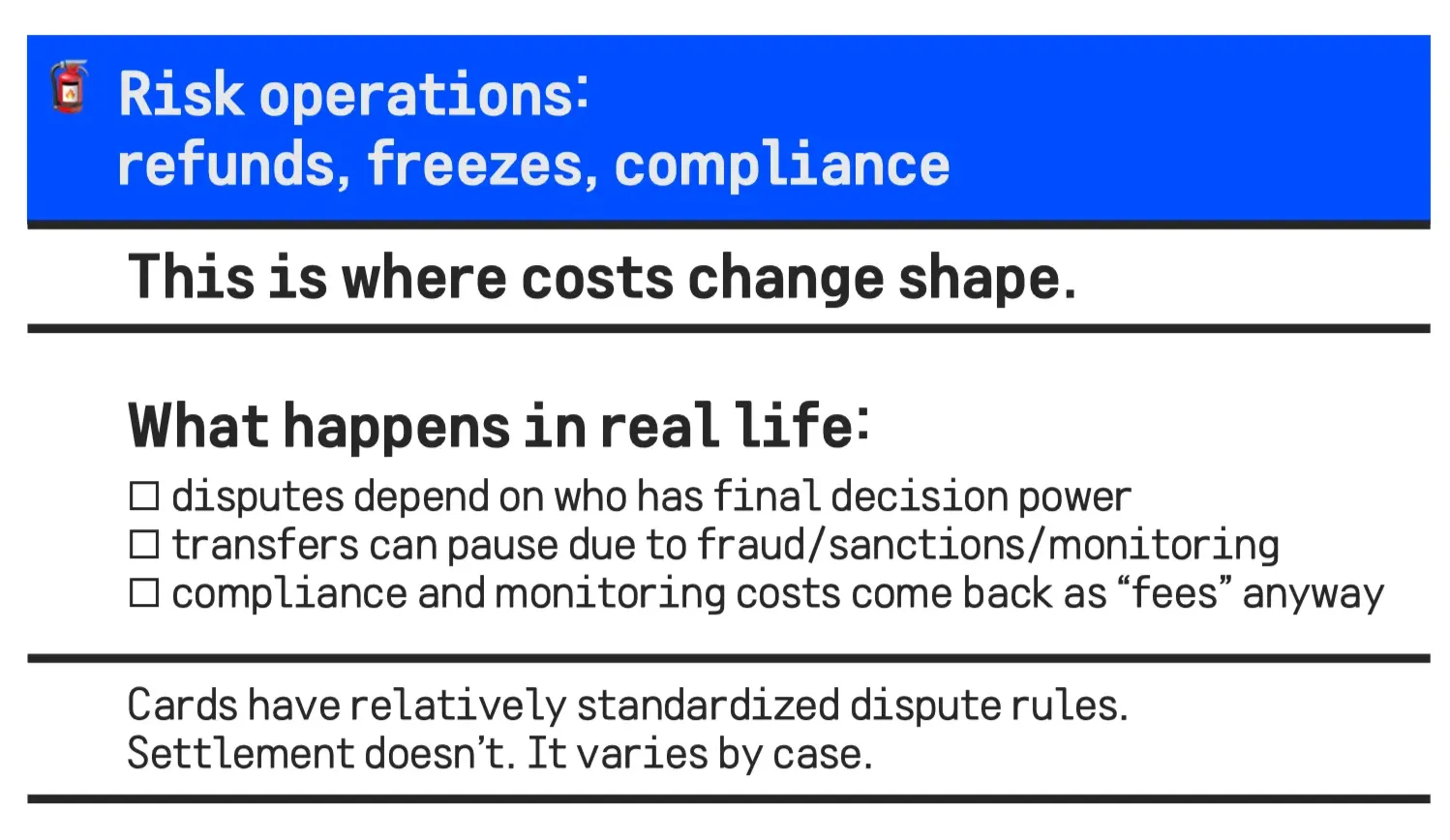
Risk operations: refunds, disputes, regulation, reserves, redemption
Here’s the key point
When payments fail, the cost is huge.
That’s why cards absorb the heavy stuff: consumer protection, disputes, fraud.
Settlement and payouts work differently.
Responsibility is fragmented.
Costs expand easily — by country, industry, and regulation.
What’s visible is payment, What’s hard is settlement.
Even after a payment clears,
costs and risks keep piling up in settlement and payouts.
In the end, whoever controls this layer sets the price.
The new owners of the cost
When people say “costs went down,” they’re usually only half right.
Most of the time, costs don’t disappear. They relocate.
So who’s collecting the bill now?
•
Issuers: earn on reserves and control how redemption works.
•
On/Off-ramps: charge for KYC, cash-outs, and FX.
•
Exchanges / brokers: capture spreads, fees, and withdrawal margins.
•
Bridges / routing: add a toll the moment you go cross-chain.
•
Risk ops: compliance, freezes, and fraud response eventually show up in the price.
Costs rarely shrink.
Most of the time, they just move to a different line item.
So the real question isn’t “How low are the fees?”